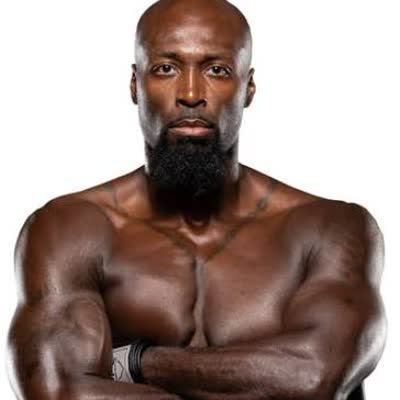
Chuck Campbell
The tape in one line
the strongest measured read on file — receipts attached
47% of Campbell's output comes in bursts — strikes less than 1 second apart. That's 2.7× what his own pace would produce by chance.
Watch the Film Study▾
greyed: no playable video registered
standup-scoped, in-round hand-log events (single annotator; ~11–15% estimated strike undercount — every level is a floor)
burst = inter-strike interval < 1.0s
lift = observed burst share ÷ a null that keeps this fighter's event COUNT but redistributes onsets uniformly over his active in-round time
engine provenance ▸
Signature tendencies
the strongest measured patterns in his verified tape — nothing editorial, receipts on every line
Output by round
pooled pace — read the trend, not single-round precision
Campbell throws more as the fight goes on: 4.2 strikes a minute in round 1, up to 6.6 by round 3.
n = 70 strikes across 3 rounds
When he gets hit · bursts
what he does when he gets hit, and how his output clusters — each measured against what his own pace would produce by chance
When strikes come at Campbell, he fires back within 2 seconds 13% of the time. That's 1.1× what his own pace would produce by chance.
not enough data to break down his responses — 10 of the 25 needed
Watch the Film Study▾
greyed: no playable video registered
standup-scoped, in-round hand-log events (single annotator; ~11–15% estimated strike undercount — every level is a floor)
response = this fighter's next strike within 2.0s of the opponent's strike (two-sided stream, single-opponent context)
lift = observed rate ÷ a circular-shift null that keeps this fighter's own pace and burst structure but scrambles timing vs the opponent
no stance asset — response classes are physical left/right
engine provenance ▸
Output by round — pooled
↑ output rises by roundCampbell throws more as the fight goes on: 4.2 strikes a minute in round 1, up to 6.6 by round 3.
n = 70 strikes across 3 rounds
Punches make up 87% of what Campbell throws; the other 13% is kicks and everything else.
Watch the Film Study▾
greyed: no playable video registered
standup-scoped, in-round hand-log events (single annotator; ~11–15% estimated strike undercount — every level is a floor)
engine provenance ▸
Campbell throws 71% of his strikes from the left side. His kicks come off the left leg 0% of the time.
not enough data to break down the mix — 1 of the 25 needed
Watch the Film Study▾
greyed: no playable video registered
standup-scoped, in-round hand-log events (single annotator; ~11–15% estimated strike undercount — every level is a floor)
no stance asset for this fight — sides are physical left/right, not lead/rear
engine provenance ▸
Campbell's most-thrown strike is the jab — 57% of everything he throws.
Watch the Film Study▾
greyed: no playable video registered
standup-scoped, in-round hand-log events (single annotator; ~11–15% estimated strike undercount — every level is a floor)
engine provenance ▸
Campbell throws more as the fight goes on: 4.2 strikes a minute in round 1, up to 6.6 by round 3.
Watch the Film Study▾
greyed: no playable video registered
standup-scoped, in-round hand-log events (single annotator; ~11–15% estimated strike undercount — every level is a floor)
per-round counts sit on a Poisson floor of roughly ±18–25% — read trends, not single-round precision
engine provenance ▸
Computed from a human sweep (no hand-log). Sides are physical left / right — stance unavailable, not lead / rear; a per-fight stance asset would unlock lead/rear.
What follows what
each row shows what he throws next after that strike — deeper red means it happens more often; click a row for the film. rows without enough tape stay visible with their reasons — an honest “not enough data” beats a confident guess
Sequences
consecutive strikes with every gap inside the fixed window — ranked by frequency
only 21 2-strike sequences on file — 25 needed
unlock: pooling more labeled fights unlocks this
only 8 3-strike sequences on file — 25 needed
unlock: pooling more labeled fights unlocks this
When he gets hit
how often Chuck Campbell fires back within 2 seconds of eating a strike. The “vs chance” number compares that to what his own pace would produce at random — so it measures deliberate answering, not just busyness. This is about his offense, not how open he is to being hit.
When strikes come at Campbell, he fires back within 2 seconds 13% of the time. That's 1.1× what his own pace would produce by chance.
not enough data to break down his responses — 10 of the 25 needed
Watch the Film Study▾
greyed: no playable video registered
standup-scoped, in-round hand-log events (single annotator; ~11–15% estimated strike undercount — every level is a floor)
response = this fighter's next strike within 2.0s of the opponent's strike (two-sided stream, single-opponent context)
lift = observed rate ÷ a circular-shift null that keeps this fighter's own pace and burst structure but scrambles timing vs the opponent
no stance asset — response classes are physical left/right
engine provenance ▸
⟶ Measured reads
the strongest conditional signals on file — receipts attached, nothing editorial
pre-registered gate: n ≥ 25 for shares/conditionals. Rows below the gate stay visible with their reasons — an honest "not enough tape" beats a confident guess.
guard telemetry coverage too thin under the frozen validity rules for this fighter
unlock: a defense-telemetry upgrade is pre-registered — these cells re-grade automatically after the next data pass
85 human-verified strikes (swept) in this fight — 62 punches, 12 knees, 9 unknowns, 1 elbow, 1 kick.
Watch the Film Study▾
greyed: no playable video registered
standup-scoped, in-round hand-log events (single annotator; ~11–15% estimated strike undercount — every level is a floor)
no round/segment scoping available for this fight — raw fight-window counts only
engine provenance ▸
Verified verdict profile
Operator verdict-ledger evidence, kept separate from temporal tendencies. Complete reviews may support totals and gated rates; partial reviews remain labeled samples; reviews below the coverage floor expose only their withholding reason.
The three frozen verdict gates
- Per-fight mix shares require n ≥ 25 reviewed real attempts; below it, counts only.
- Complete-fight pooled mix shares and own rates require n ≥ 25 real attempts.
- Defense clean-absorb rates require a complete review and n ≥ 25 opponent real attempts.
- Partial reviews are non-random samples: counts and eligible sample mixes are not fight totals or accuracy.
- Physical side means left/right, not lead/rear stance. Jab/cross for swept strikes is stance-INFERRED from pose: a windowed ankle-vote at the strike instant when decisive (94.3% vs hand-log truth), else the fight-level lead; strikes where both abstain stay "straight" rather than guess.
- A single reviewer produced these verdicts; unresolved attribution/validity verdicts are a floor on missingness.
Coverage & provenance
adjudication_only
Not measurable from broadcast
the single-feed footage can’t support these — they are not a locked upgrade, they simply aren’t recoverable. Saying so is the product.
Landed / grazed / missed
outcome carries ~no machine signal at this capture and is unreliable even by eye from a single broadcast feed
Fine punch subtype (jab / cross / hook)
capped by 72% annotator self-agreement and the single-feed capture wall
Clinch & ground interior
the corpus is standup-scoped — a single broadcast feed can't resolve grappling exchanges
Feint intent
intent-without-contact is not recoverable from broadcast video
Known limits
- single-annotator ground truth; measured undercount ~8.8% on the deepest-swept fight — global estimate 11–15%; every count is a floor, not an exaggeration
- tendency numbers are standup-scoped and in-round; clinch/ground exchanges are not measured
- stance (lead/rear) is a per-fight constant from a pose asset; a mid-fight stance switch would mislabel lead/rear symmetrically
- per-round counts sit on a Poisson floor of roughly ±18–25%; product language is trends and conditionals, never single-round precision
Every fight on this fighter's file — the event, the result, and how deep the verified data goes.
Want more of their fights processed? Start a pack or request a fight.